
Let’s stop pretending the biggest problem in high school is hard classes or pop quizzes. No, the real enemy strikes every passing period in every hallway: the slow-walkers—the human traffic jams that clog the flow and test everyone’s patience.
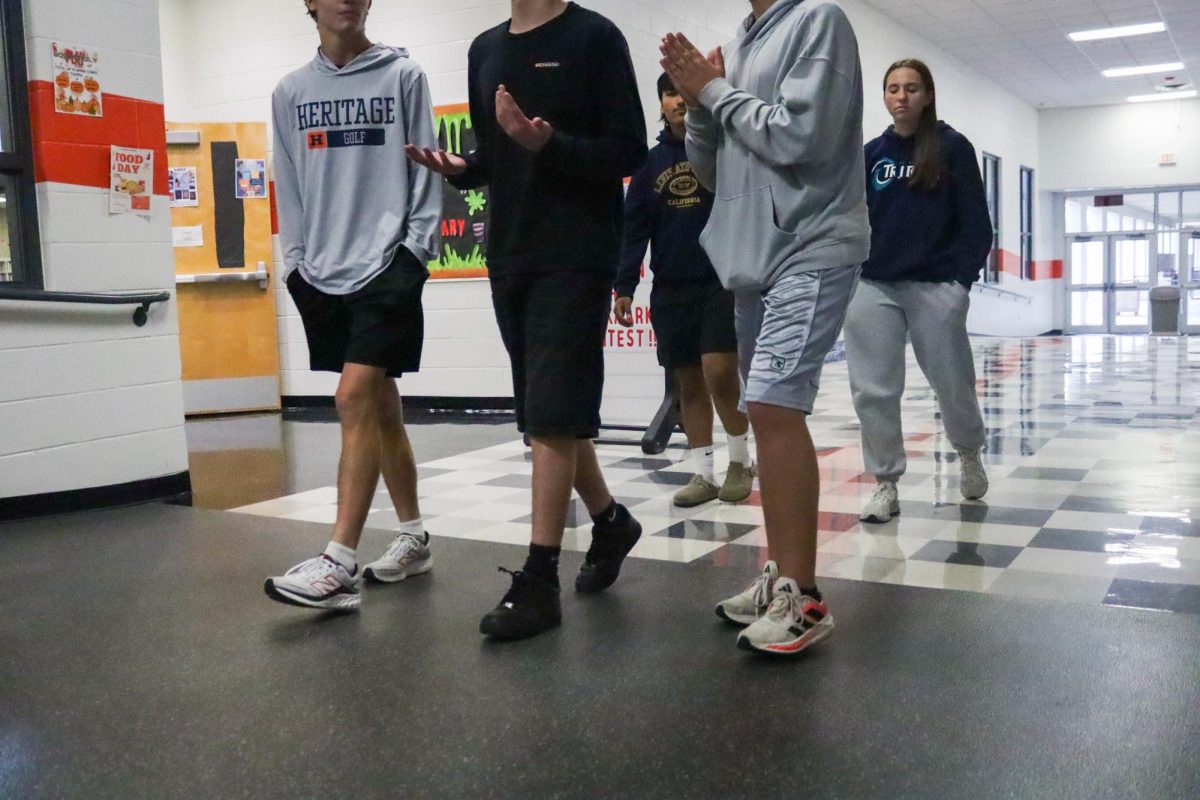
At Rogers Heritage High School, we have exactly five minutes to get from one class to another. That’s barely enough time to walk across the school, dodge freshmen standing in the middle of the hall like confused penguins and squeeze past packs of friends who think they’re the stars of a music video walking in slow motion.
Jessica Aguilera (10) said, “[Because of] laziness [or] a lack of want to go to their classes [this] causes students to walk slowly.”
Hallways are meant for walking—not sightseeing, gossip sessions or existential pauses mid-stride. It’s called a hallway, not a hangout. There’s an unspoken social contract: keep right, keep moving, and for the love of all that is efficient, don’t stop in the middle. Yet somehow, these slow-moving speed bumps seem to believe they’re the main characters and the rest of us are just background extras waiting for them to move. What’s worse, they often walk in herds—a full wall of sluggish motion, forming an impenetrable blockade that no polite “excuse me” can break. You either weave through like it’s a stealth mission or accept your fate: a painfully slow crawl to class.
Not everyone moves at the same pace, and that’s okay—some students might be carrying heavy backpacks, recovering from injuries, or simply trying to avoid getting shoved. Calling them ‘villains’ ignores that schools should accommodate different needs, not punish them. Instead of waging war on slow walkers, maybe we should focus on better traffic flow—staggered release times, clearer hallway routes or even just more patience. After all, school isn’t a racetrack; it’s a place for learning—and that includes learning to share space respectfully. While it’s easy to blame slow walkers for hallway chaos, that view overlooks the real issue—overcrowded schools and poorly designed passing periods. In my experience, it takes at least two minutes to leave my classroom because of traffic, and even longer to get around clumped groups of students in these narrow hallways, which nearly makes me late to all of my classes. Five minutes might sound like enough time to some, but when 2,000 students flood narrow hallways at once, even the fastest walker ends up stuck.
If you can’t keep pace, step aside—this world moves too fast for the molasses-footed to clog the arteries of progress. Slow walkers aren’t just an inconvenience, they’re a daily menace and it’s time we call them what they are: the traffic jam of humanity.